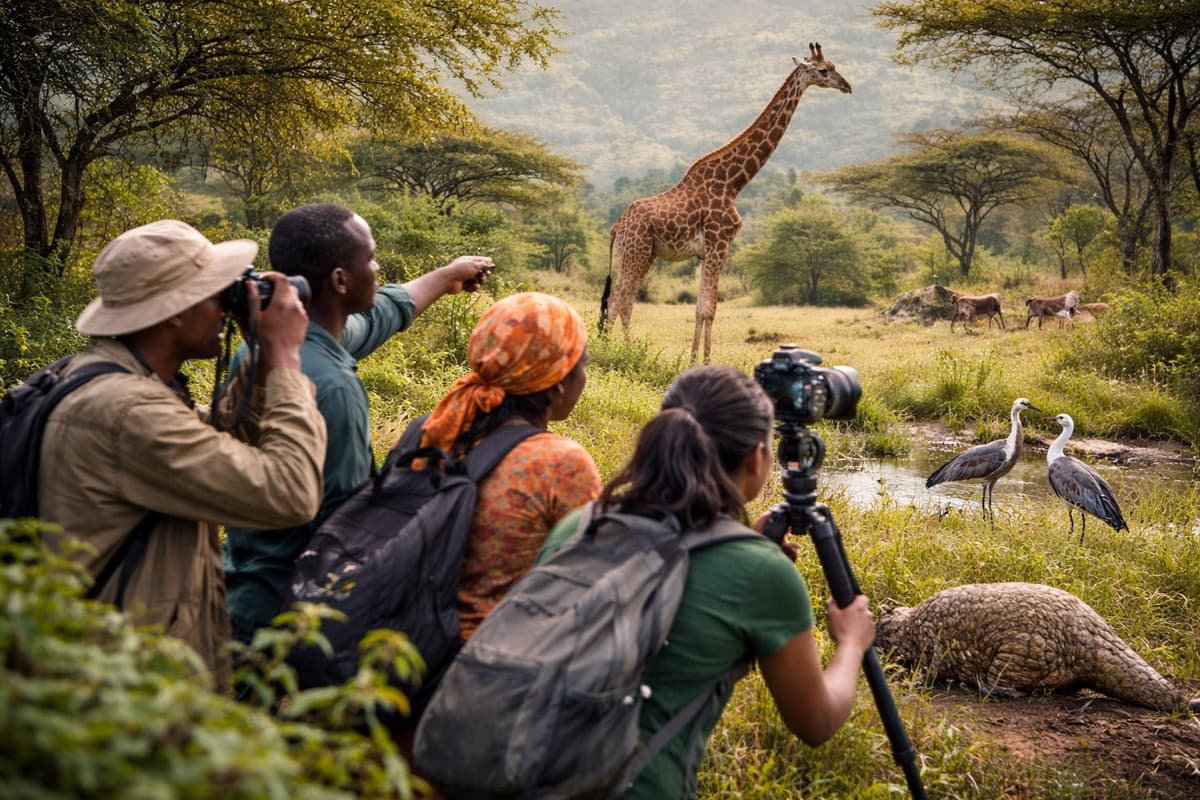
Our teams have completed a landmark biodiversity assessment documenting over 50 species across the Elgeyo Marakwet escarpment — many found nowhere else.
The Elgeyo Marakwet escarpment is one of Kenya's most ecologically significant — yet least studied — landscapes. Its combination of altitude gradient, microclimates, and proximity to the Kerio Valley creates conditions for remarkable biodiversity. Until recently, however, no systematic documentation of that biodiversity existed.
The Survey
In collaboration with local naturalists, university researchers, and community scouts, REMEI conducted a 12-month biodiversity assessment covering 15,000 hectares of the escarpment. The survey documented plant species, birds, mammals, reptiles, amphibians, and invertebrates using transect surveys, camera traps, acoustic monitoring, and community interviews.
Key Findings
The results exceeded expectations. The survey documented:
- Over 340 plant species, including 12 species new to science
- 87 bird species, including 3 globally threatened species
- 23 mammal species, including leopard, caracal, and aardvark
- Multiple endemic reptile and amphibian species previously unrecorded in the county
Conservation Implications
This baseline dataset will guide REMEI's biodiversity conservation work for years to come. It identifies critical habitat patches for priority protection, highlights restoration opportunities, and — importantly — provides evidence to support advocacy for stronger land-use protections for the escarpment.